Truck Owner App in India: How to List Trucks and Find Load Opportunities
20 Nov, 2026
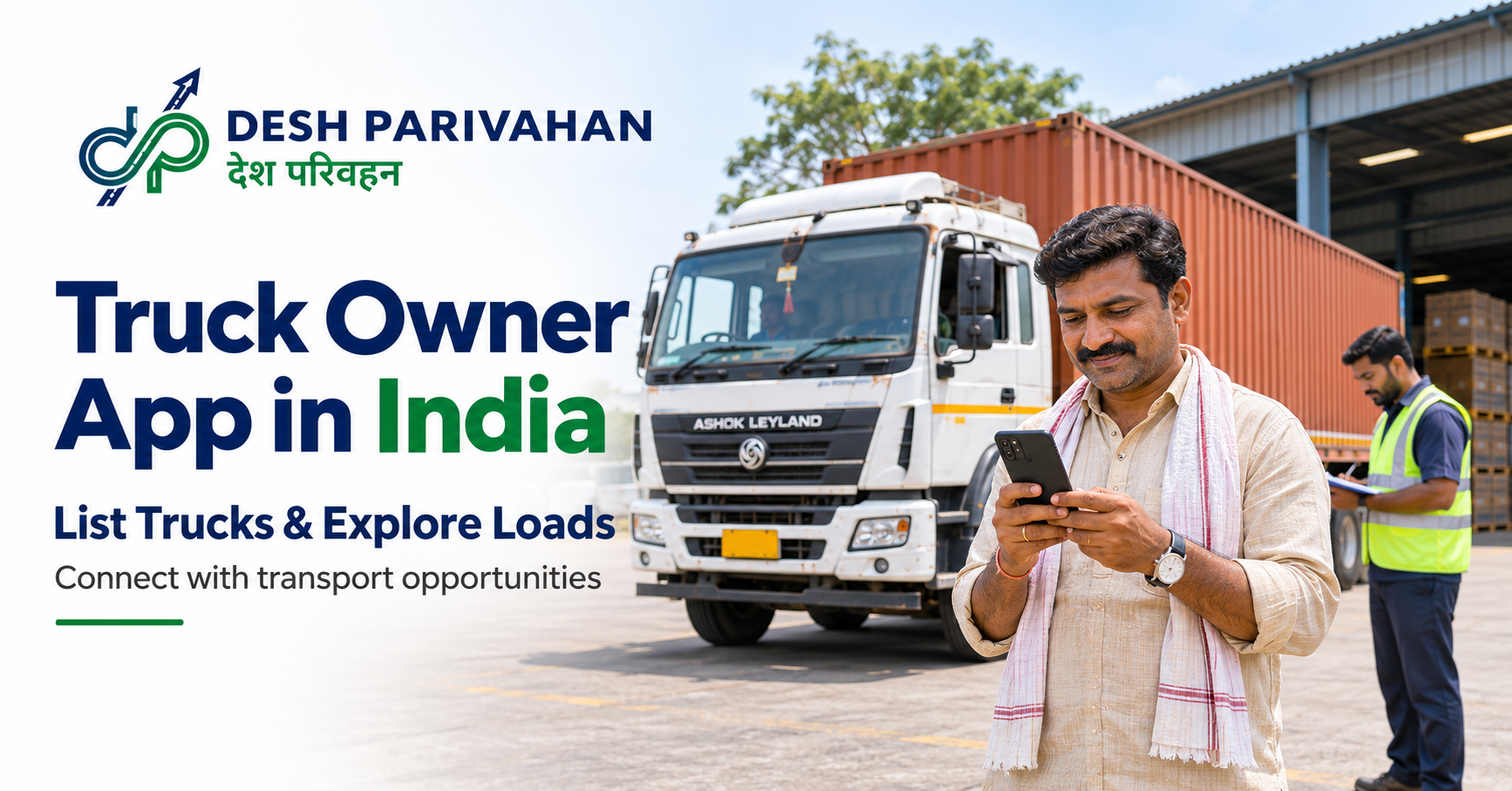
Owning a truck is one thing. Keeping it regularly engaged in suitable transport work is another. Ask a truck owner who manages even two or three vehicles. One truck may be unloading in Surat, another might be on its way to Mumbai, and a third may be waiting for its next trip.
Between phone calls, loading schedules and discussions with transporters, finding the next suitable load becomes part of the daily routine. Regular customers and transport agents are useful, but they may not have work available every time your vehicle is free.
This is where a truck owner app can help. Digital transport marketplaces allow truck owners to share vehicle availability, explore goods requirements and connect with people who need transportation services.
Let's look at how these platforms work, what makes a truck listing useful and how owners can make better decisions before accepting a transport job.
A truck owner app is a mobile application designed to support certain activities involved in owning or operating commercial trucks. Different applications serve different purposes. Some focus on vehicle maintenance, expenses and fleet records. Others help truck owners discover transport requirements and connect with potential customers.
For an owner who wants to find transportation opportunities, a digital transport marketplace can be particularly useful. For example, suppose you have a truck available in Ahmedabad and a business needs to move goods towards Rajkot.
If both parties share their requirements through the same platform, they have an opportunity to discover each other and discuss the job. The application helps create the connection. Whether the transport arrangement is suitable still depends on the vehicle, route, cargo and agreed terms.
Many Indian truck owners build their businesses through personal relationships. A factory manager calls when goods are ready. A transport agent shares an available shipment. Another truck owner passes along a contact. These relationships matter, and an app doesn't need to replace them. The difficulty comes when your truck is available but your regular contacts don't have a suitable load.
You may spend hours calling different people, only to discover that their shipment has already been assigned or the pickup location is too far away. An online marketplace provides another place to look.
Instead of depending entirely on incoming calls, truck owners can explore posted transport requirements and make enquiries themselves. Having additional options can be useful, especially when operating outside familiar routes.
A truck listing should help a potential customer understand what vehicle you have and where it can operate.
Imagine seeing these two messages:
Listing A: "Truck available. Contact me."
Listing B: "Open-body commercial truck available from Rajkot for suitable Gujarat and Maharashtra routes. Vehicle details and loading availability can be discussed."
The second message gives a clearer starting point. When preparing your listing, keep the following information ready:
|
Information |
Why It Matters |
|
Current vehicle location |
Helps customers understand where the truck is available |
|
Truck and body type |
Helps determine cargo suitability |
|
Permitted carrying capacity |
Helps avoid unsuitable loads |
|
Preferred routes |
Shows where the owner is willing to operate |
|
Availability date |
Helps plan loading arrangements |
|
Accurate contact details |
Allows interested parties to communicate |
Provide accurate information in the fields available on the platform. If your truck is already committed to another trip, update its availability rather than leaving outdated information.
A useful listing isn't necessarily the longest one. It's the one that answers the important questions clearly.
A load matching app helps truck owners and goods owners discover transport requirements that may fit their respective needs. The idea is straightforward. One person has goods to move. Another has a vehicle available.
A digital marketplace brings their information into one place so they can identify possible connections. However, finding a potential match doesn't mean the load is automatically suitable or booked. Consider a truck owner whose vehicle will be available near Vadodara.
A shipment going towards Ahmedabad may be worth discussing. Another shipment going in a completely different direction may be less practical, even if the offered freight looks attractive. The owner still needs to assess the distance, loading schedule, cargo requirements and overall operating costs. A listing-based platform helps with discovery. The final decision remains with the people involved.
Finding an available shipment is only the beginning.
A load may look attractive until you discover that the truck must travel a considerable distance without cargo to reach the loading point. Always consider the empty kilometres involved.
An open-body vehicle, container truck and trailer have different uses. Ask about the goods, total weight, dimensions and handling requirements. Never agree to carry more than the vehicle's permitted capacity.
A truck standing at a warehouse for an extended period can affect your next trip. Confirm when the goods will actually be ready and whether loading facilities are available.
Discuss the freight amount, tolls, loading and unloading responsibilities, waiting charges and payment conditions. Don't assume that every expense is included in the initial quotation.
Before committing your truck, independently check the contact details and relevant business information. Also confirm the shipment documents and other transport requirements. Keep important agreements in writing.
Imagine you own a truck that has just completed a delivery near Ahmedabad. You receive two enquiries. The first involves a nearby pickup, but the destination doesn't suit your preferred route.
The second follows your preferred direction, although the pickup is farther away. Which one should you choose? There's no universal answer. You need to consider how much empty travel each option requires, when loading will happen, how much the job pays and where your truck will finish its next journey. Also account for driver availability, fuel, tolls and other operating expenses.
A transport job isn't automatically profitable just because the freight amount looks good. This is why comparing suitable opportunities matters more than accepting every available enquiry.
Desh Parivahan is an Indian digital transport marketplace connecting truck owners, transporters, businesses and goods owners. Through the platform, truck owners can publish information about their available trucks and routes. Businesses and goods owners can share transportation requirements, allowing relevant users to discover listings and contact one another. For truck owners, the platform offers three practical possibilities.
Truck owners can share vehicle availability and relevant route details so people looking for transportation services can discover their listings. Clear vehicle information helps potential customers understand whether the truck may suit their requirements.
Users can browse goods requirements posted by other participants and identify transport opportunities worth discussing. The availability of suitable loads depends on active listings, routes and timing.
Once a relevant requirement is found, users can communicate directly to discuss the cargo, loading location, destination and commercial terms. Desh Parivahan facilitates these connections. It does not directly operate the trucks or guarantee transport bookings, customers or income.
If you're new to digital transport marketplaces, you can also read our goods transport app guide for businesses to understand how the other side of the marketplace works.
A truck owner's responsibilities don't end after finding a load. During a journey, drivers may need access to repair facilities, tyre shops or other highway services. Desh Parivahan includes listings in transport-related categories such as garages and mechanics, puncture and tyre services, crane and towing, warehouses, dhabas and petrol pumps.
These listings offer another way to discover potential service providers. Before visiting or arranging assistance, confirm the business location, availability, type of service and charges directly.
The platform also includes a marketplace for buying and selling transport-related items, including commercial vehicles and vehicle products. If you're considering purchasing another vehicle, our used truck buying checklist explains what to inspect before making a decision.
If you're a truck owner interested in exploring digital transport connections, you can begin with a few straightforward steps.
Step 1: Download the application
Install Desh Parivahan through its official Android or iPhone app listing.
Step 2: Register and complete your details
Create your account and provide the relevant profile information requested by the application. Keep your contact information accurate.
Step 3: Add your available truck
Use the vehicle-listing option to enter the applicable truck details, carrying capacity, route information and availability.
Step 4: Explore transport requirements
Check posted goods requirements that may be relevant to your vehicle and operating routes.
Step 5: Contact the relevant party
Discuss the shipment details, pickup arrangements, freight charges and other conditions before confirming anything.The exact screens or available fields may change with app updates. For additional guidance, visit the Desh Parivahan platform walkthroughs.
Using an application doesn't eliminate the need for careful decisions. A few common mistakes are worth watching for. Leaving outdated truck availability: If the vehicle is no longer free, update the information so potential customers aren't misled.
Sharing incomplete vehicle details: Accurate capacity, body type and location information can make discussions easier. Accepting unsuitable cargo: Always check whether the truck can safely and legally carry the proposed shipment. Ignoring the total trip cost: Freight revenue should be evaluated alongside fuel, tolls, waiting time and empty kilometres.
Assuming every listing is confirmed: Contact the relevant person and verify the requirement before sending your vehicle. These habits are useful whether you find loads through an app, a transport agent or an existing customer.
Running a truck business involves constant decisions about routes, availability, customers and operating expenses. A truck owner app can help owners share vehicle availability, explore suitable transport requirements and connect with potential customers beyond their regular transport contacts. The key is to maintain accurate truck information, compare available opportunities and verify shipment details carefully before accepting any transport work.
If you're a truck owner looking to expand your network of potential transport connections, Desh Parivahan is one platform you can explore. List your truck. Explore transport requirements. Connect with the transport community.
Official Website: Desh Parivahan
Download the App:
Different truck owner apps offer different services, including vehicle management and transport-marketplace listings. Desh Parivahan allows truck owners to publish available trucks, explore goods requirements and connect with potential transport customers.
Yes. Truck owners and transporters can share vehicle and route information through the platform so relevant users can discover their listings.
A load matching app helps connect information about available trucks with posted goods requirements. Users evaluate relevant opportunities and contact one another to discuss transportation arrangements.
No. Desh Parivahan is a digital listing and connection platform. Load availability and final transport agreements depend on the participating users.
Yes. The platform includes categories such as garages, tyre and puncture services, warehouses, crane and towing, dhabas and petrol pumps. Users should confirm service details directly with providers.
Connect with verified transporters and shippers instantly. Post trucks, track shipments, and grow your logistics business—all in one platform.


